 EN − AZN
 Azərbaycan
 Русский

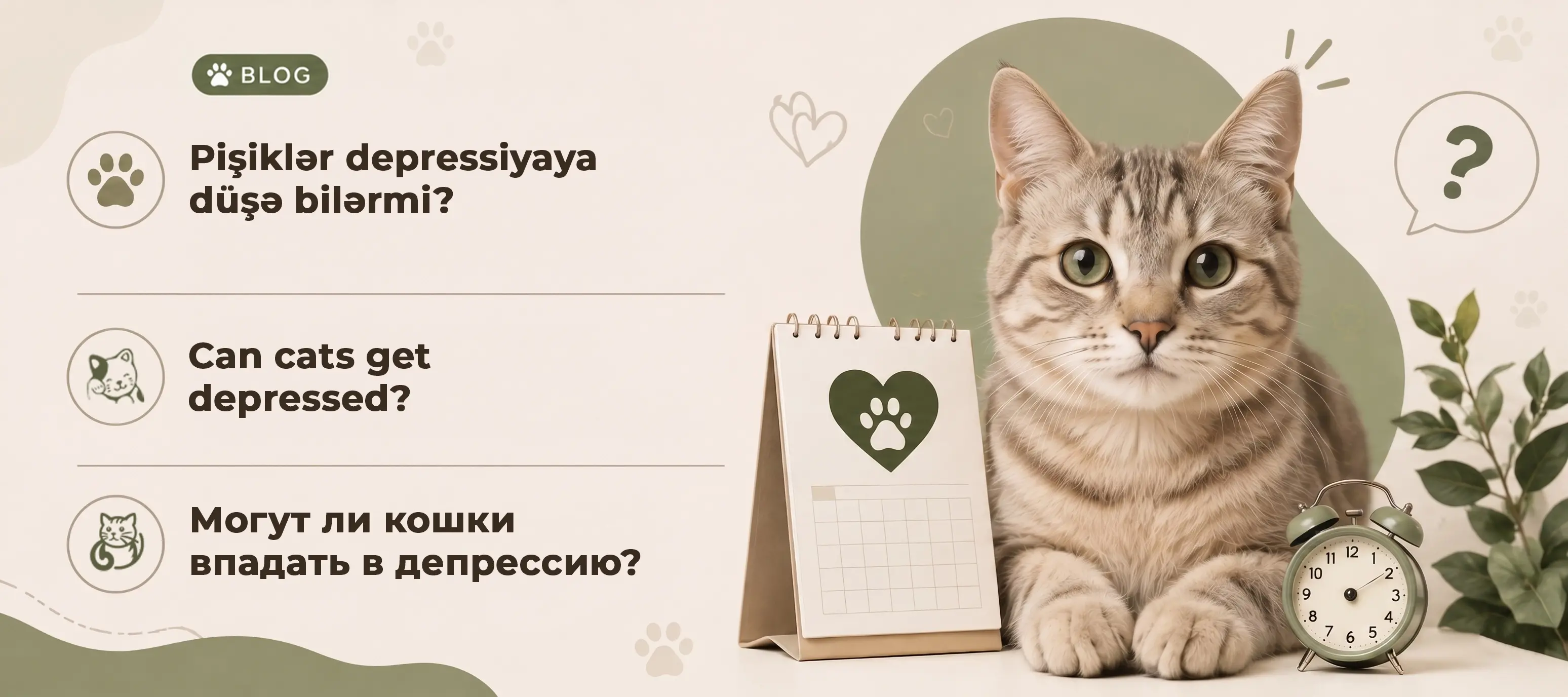
Depression in Cats: A Detailed Guide
Can cats suffer from depression?
Yes, cats, just like humans, can experience emotional disorders. Cats are very sensitive and delicate creatures. Their mental state is highly affected by their environment and relationships.
Main Causes of Depression
1. Environmental changes
-
Moving to a new home
-
Furniture changes
-
Arrival of a new animal or person in the home
-
Noisy or chaotic environment
2. Lack of love and attention
-
Being left alone for long periods
-
Little interaction with the owner
-
Lack of physical contact and play
3. Loss and separation
-
Death of another pet or the owner
-
Separation anxiety (especially if strongly bonded)
4. Illness or pain
-
Hidden physical problems such as dental pain, arthritis, urinary infections
-
Age-related degenerative diseases
5. Boring and unstimulating life
-
Lack of toys
-
Lack of activity and stimulation
-
Small and boring space
Behavioral Signs of Depression
| Sign | Explanation |
|---|---|
| Loss of appetite | Reduced food intake or complete refusal |
| Lethargy | Spending most of the day inactive |
| Loss of interest in play | No interest in favorite toys |
| Excessive or changed meowing | Different or increased vocalization |
| Isolation | Hiding and avoiding contact |
| Litter box issues | Urinating/defecating outside litter box |
| Over-grooming | Hair loss due to excessive licking |
| Aggressive or fearful behavior | Avoiding people/animals or acting aggressively |
Treatment and Approach
1. Veterinary check-up
- First step should always be a vet examination.
- Physical health problems must be ruled out.
2. Environmental enrichment
- Toys, climbing structures, hiding places
- Window perches for stimulation (birds, sunlight)
3. Regular interaction and play
- Daily play sessions (laser, ball, feather toys)
- Gentle talking and affection
4. Routine building
- Keep feeding, play, and sleep times consistent
- Minimize sudden changes
5. Medication when necessary
- In severe cases, veterinarians may prescribe sedatives or antidepressants.
Prevention
- Regular interaction with your cat
- Provide a stimulating environment
- Healthy diet and safe living conditions
- Gradual transitions during changes
- Pay attention to emotional behavior changes
NConclusion
Cats may seem calm, but they are highly emotional and sensitive creatures. Any behavioral change may indicate internal issues. With patience, observation, and love, it is possible to help a cat recover from depression.

Why Does My Dog Eat So Fast? Causes and What to Do
İtlər üçün bloqlar
Why Does My Dog Eat So Fast? Causes and What to Do

My dog is scratching a lot, what could be the reason?
İtlər üçün bloqlar
Causes of Excessive Scratching in Dogs

How often should dogs be bathed?
İtlər üçün bloqlar
How frequently should we bathe dogs?

Why does my dog want to sleep in my bed?
İtlər üçün bloqlar
The main reasons why my dog wants to sleep in my bed.

Why do dogs sniff everything?
İtlər üçün bloqlar
The reasons why dogs sniff everything.

Which vaccines should dogs receive?
İtlər üçün bloqlar
Vaccines that dogs should receive.

My dog barks a lot, what should I do?
İtlər üçün bloqlar
My dog barks a lot, what should I do?

How can I train my dog? (Commands and Behavior)
İtlər üçün bloqlar
How can I teach my dog commands and behaviors?